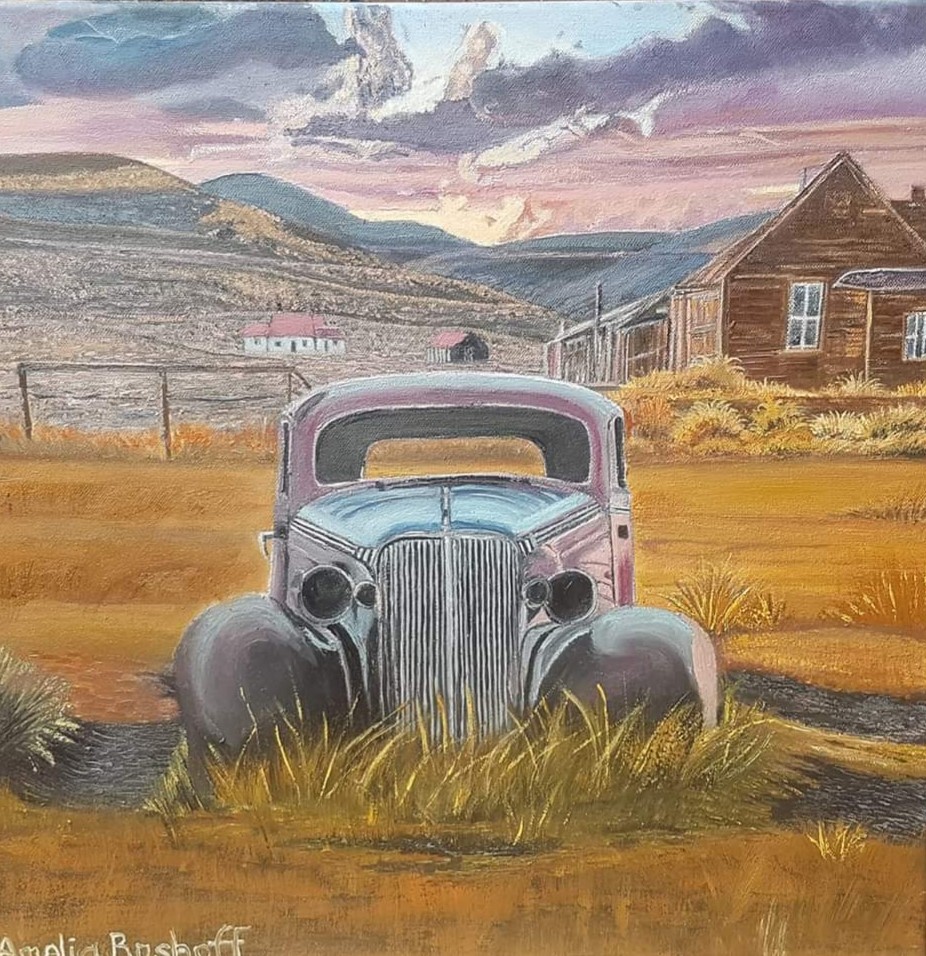
As long as I can remember I loved art and have been creating since I could hold a pencil…”
Introduction
I am starting to sound like a song on replay, because whenever I encounter
a new artist, I cannot resist from singing their praise. This particular subspecies
of humankind is forever so brilliant in whatever they create and, as a result
of meeting so many of these outstanding specimens, I am bringing accolades so frequently
that I am starting to get concerned that people reading this blog may start
losing confidence in my opinion. Therefore, for the first time, I am going to
leave the exploration of the topic and the vocalisation of the joy up to you,
because Gideon Geldenhuys’s artworks has the capacity to express themselves exceptionally
well….
Background
Gideon stays in Centurion now, but was born in 1971 in Cape Town and
matriculated in De Aar. He is divorced and have two grownup daughters. He is
already an established artist, having been published and sold both locally and
abroad. One of his major international acknowledgments was that one of his
paintings was used on the cover page of the magazine of the Houston Safari Club
in Texas.

Let us hear what the man has to say…
Firstly, Gideon, what jobs have you done other than being an artist?
I have never been a full-time artist as art does not bring sufficient
income when you start out. It is therefore something I am doing in my spare
time while following a fulltime salaried career. I have been working at the Police
and studied Police Administration through the Technicon South Africa through correspondence.
I worked in the Customs Anti-smuggling Unit, after that as a Retail Manager and
now as a Sales Manager. I also do refurbishment of existing paintings that has
some minor issues that need touching up.
What’s your art background?
I had Art as a subject at school, but as long as I can remember I loved
art and have been creating since I could hold a pencil. An inspiration was when
I won an art competition at the Central Karoo Agricultural Show in Grade 11.
Art has always only been a hobby, but I am still dreaming of doing it
full-time. It is my heart’s wish to get that big break and to become well-known
globally as it is my experience that one cannot make a living by only selling
locally.
What has been a major art influence?
I always loved the art of the old masters. Their realism, the detail
and the lavishly deep colours, their fine techniques and their extravagant,
multi-layered style of oil painting amazes me. During the past few hundred
years scientists have examined the old paintings and have produced many accounts
on their findings – today the latest bunch of them uses X-ray and infrared
technology to expose even the initial lines drawn on the canvas. To myself,
however, the end result of the antique artists’ labour still amazes me and
drive me to produce equivalent inspiring, realistic, high quality paintings by
applying modern approaches and materials.
One day, in 2010, I was surfing the internet for a photo of a Karoo
landscape and I found one that I liked. When I opened the photo-link it took me
to the website of Rob McIntosh and only then I realised to my astonishment that
the photo was a picture of an actual painting by him. He was since then a great
influence and his work inspired me to concentrate on painting as art medium. Rob
McIntosh was born in South-Africa in 1949 and only started painting in 1980
after which he emigrated to America and now lives on a 65 ft double story
houseboat on Lake Pleasant in Phoenix, Arizona. He is doing paintings mostly with
nature and wildlife as topic. He is famous and well-known all over the world
for his astonishing realism as well as for the power of his artwork at defining
and preserving a mood. Although Rob was in South Africa a few times I never met
him personally but he sent me a free signed copy of one of his books. His success
however encouraged me and proved that there is much to be said for following one’s
own guidelines and instincts.
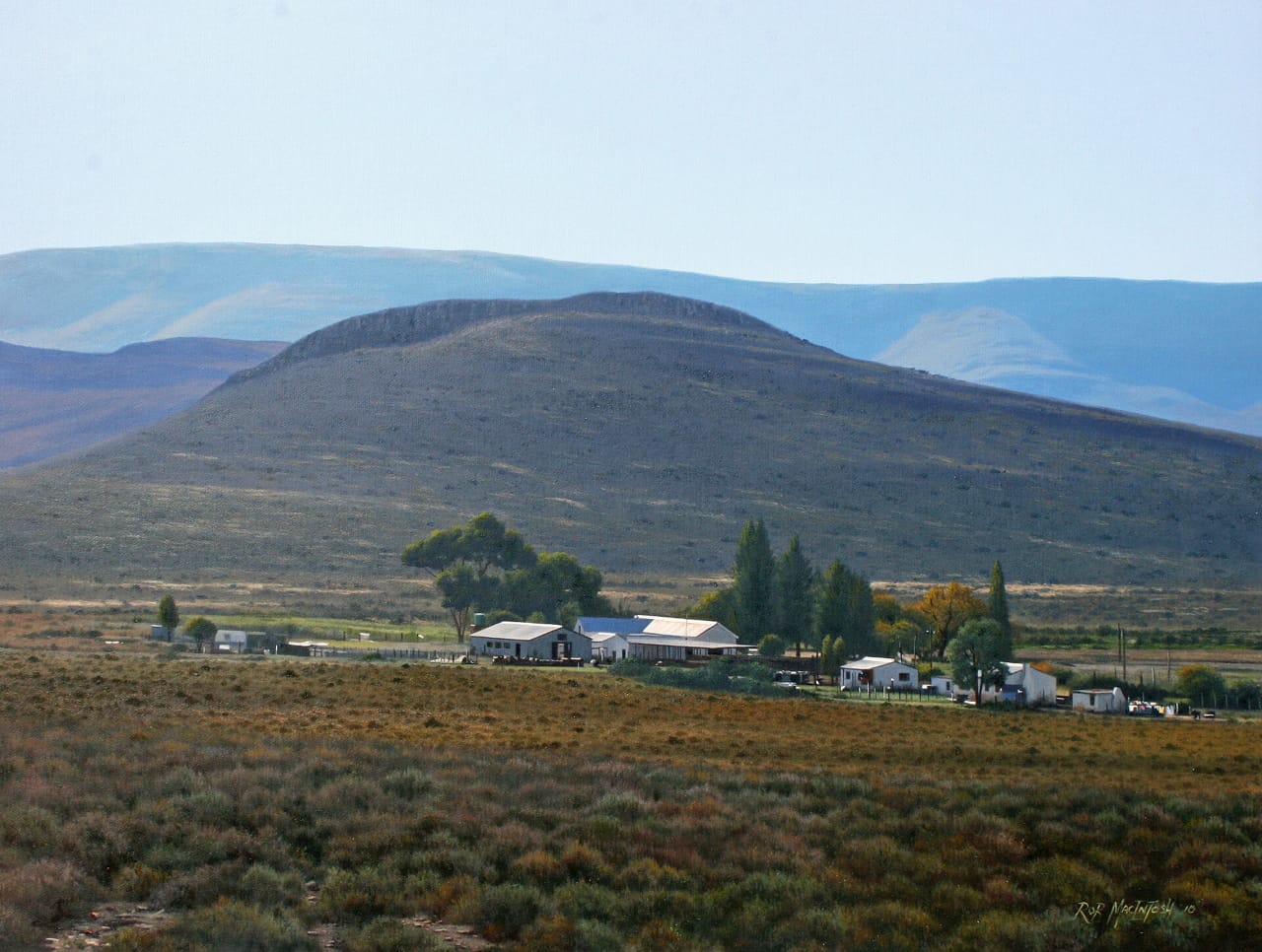
Painting by Rob McIntosh
What’s the best thing about being an artist?
Art allows me to express myself by recreating inspirational scenes and to
get the satisfaction of experiencing people appreciating what I have created.

How much time do you spend on creating art?
I spend as much time as I can on art as a hobby. When I do get the
opportunity, I spend probably 4 to 6 hours at a session
Do you ever feel disheartened?
Sometimes I tend to get discouraged when my circumstances paralyse my
creativity. This usually transpires when I have to travel for work and do not
get the opportunity to pack out my brushes and capture the visions in my head.
What inspires you to create?
Inspiration often comes from my soul – from an inner feeling, emotions, imagination or even memories - but
mostly it comes from observing stimulating scenes or photos. Inspiration is
everywhere - one just needs to open your eyes, and take it in.
Topics that inspire me are
the sea, landscapes, cars, trains, planes, ships and people – I love to do character
portraits.

Do you strive to be unique in your creative endeavours?
I strive for photo realism and that does not allow for creative
expression in terms of extensive paint techniques or the abuse of line, colour
and light. I find that my creativity is focused on the best composition of
the visual elements and the amazing natural light, true colours and the mood of
the scene I want to portray. I am completely dedicated to realistic perfection.

What if you’re not inspired to create?
I seldom am not inspired to create. As soon as I sit down and get going,
I can get lost in my art as a rule. I take breaks when I get tired.
How important are titles for you?
Simple titles are vital to identify artwork for reference purposes, but
most importantly to provide the people looking at the artwork more information
without just stating the obvious. The art must do the talking and I find that Facebook
and other friends understanding the piece are coming up with effective names. Most
of the time, however, the titles are already in my head as soon as I start
creating.
Examples of titles
that speak to me are the three classic ships that I have recently had
immense joy in painting as I lived through their stories and the essence of
life in general. The first one I named Persistence and if you look at the
picture you can understand why. The idea behind it was to demonstrate that one
only needs to push on and to charge the waves of life from behind and break
through them. The second one I named
Legacy. It is about a ship that keeps on sailing and never sinks – like a
father leaving his son an inheritance and the son and the son’s children after
him will use it as foundation for their lives. The third ship is Steadfast and
does not allow the waves to change its course – the ship is super steady,
secure and unwavering.


Which mediums do you like?
I specialise in oil paint and pencil or graphite – it gives me the most
joy. I however also use water paint when I doing some of the miniature
paintings. Graphite and pencil are faster mediums and allows for mistakes to be
corrected easily and can be used with great effect to capture mood. I find that
graphite and pencil also allow for more flexibility to create as I do not have
to carry lots of paint tubes and brushes along when I am going away for work.

What else have you enjoyed experimenting with?
In 2015 I made some sketches of steam locomotives and sold it to a
buyer who then commissioned me to do a series of miniature paintings. In total there
were about 50 of the locomotives as well as 13 Mercedes Benz classics, 6
Spitfire fighter planes and a number of Russian Orthodox Saints. I have never
done miniatures before, but I soon got the hang of it and started to adore this
art form. These days I also do miniatures like the ones below (100mm x 70mm) in
any medium.


How do you know when a piece is done?
As soon as nothing bothers my eye anymore and I feel the same inspiring
feeling when I look at the painting as I did when getting the vision or seeing
the subject matter that inspired me.
Can I see your studio?


What can artists not do without?
A quiet and private space to create in.
How much time does it take to complete an artwork?
I am working full-time from 8 to 5 every day and I am on the road about
all the time. As I don’t get much time to do my art, it can take weeks to complete
a painting. Hour-wise though, probably an average of 24 to 30 hours per
artwork.
Do you listen to music when you’re create?
I’m quite happy with being alone while painting. I love classic music,
country, instrumental, lots of 80's music and listen to Queen very often. These
music genres have the ability to encourage powerful emotions and the type of
music I listen to depends on my mood and the artwork that I am creating at the
time.

What is the hardest part of creating a work of art?
Getting started and getting everything ready is the hardest. The most favourite
part is week-ends when I can focus on my art!
Where can prospective buyers see your work?
I showcase my art on Facebook and on my personal website at as well as
on the website of South African Artists. I find that my art appeals to buyers
that are somewhat older – 30 and up, mostly over 40. I never kept record of sales
but the income from my art helped to pull me through during tough times when I
was laid of at work.
I have a few works hanging at the Blue Saffron restaurant in Waterkloof,
Pretoria. I initially contacted a woman displaying art at the restaurant and she
commissioned me to do a huge painting of an elephant up close for the
restaurant and also to paint some horses to showcase there. I painted a series
of six horses and my Facebook friends came forth with names for the paintings.
The name of the series is Scuderia which is the Italian for a stable for war- or
race horses.

Isn’t it hard to part with your artworks?
Success in the art world is being able to make a living through your
art, but it is hard to say goodbye to a piece that I created from a unique
inspiration Commissions are usually not so hard to part with.

What should artists do these days to market their art?
To get famous, one needs to get a big break. This is usually is
instigated by favourable commentary by a well-known critic or someone with
influence and respect in collectors’ circles
How do you feel about your future as artist?
If I had to start over, I would never choose a different hobby, but my goal
is to become a professional artist and have my studio overlooking the ocean. My
dream project is a commission for a series or art works for a hospital or huge
company
A piece of advice to others?
Art today is like music or fashion…it is only popular once a trend
setter says so. Artists should never fall into that trap, be yourself - develop
your own art and do not become a copycat. Young artists should start marketing
their work sooner and live their dream